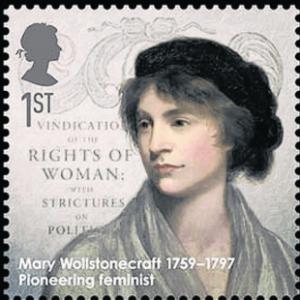
Quote of the Day: Mary Wollstonecraft
“Strengthen the female mind by enlarging it, and there will be an end to blind obedience.”
Mary Wollstonecraft, 1759–1797

“Strengthen the female mind by enlarging it, and there will be an end to blind obedience.”
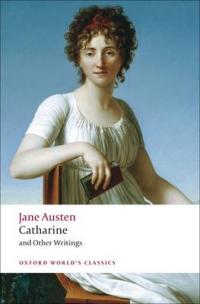 Today was a great day. I presented at a book discussion Catharine, or the Bower, an unfinished story written by Jane Austen when she was 16 years old. It is one of only two stories contained in Volume the Third of her youthful and ebullient writings, called the Juvenilia. Her father wrote of them “Effusions of Fancy by a Young Lady Consisting of Tales in a Style entirely new.” Austen’s earlier Juvenilia stories are literary parody consisting of coincidences, lurid horrors, and comic situations. They are boisterous and youthful and border the ridiculous and satirical towards the sentimental. Despite being written by such a young person (beginning at the age of 12) the stories are chock full of theft, drunkenness, sexual indiscretion, and lewdness, found to be most shocking by the Victorians. Her family refrained from publishing the volumes of the Juvenilia wanting to keep the reputation of the demure and devout maiden aunt pure. They were not published until 1933 (Volume the First), 1922 (Volume the Second), and 1951 (Volume the Third).
Catharine is considered important because, albeit raw, it intimates the maturity of her later published novels. Austen is beginning to direct her wit towards her interests of courtship, romance, and family relationships; the range and depth of her characterization, clarity of dialogue and action is emerging. Discernible are familiar character types that will be more fleshed out in the novels: self-centered, selfish, and empty-headed young ladies; thoughtless, idle, and seductive young gentlemen; vivacious, witty, and bright heroines, and conservative, over-protective and hypochondriac elders. Catharine also hints at acceptable principles of behavior and class distinction characteristic of her fully developed novels.
So, yes, today was a good day. I got to express my own “effusions of fancy” about my favorite author and am still allowed to join in next month when we will discuss A Vindication of the Rights of Woman by Mary Wollstonecraft. I already have this and a biography of the early feminist in my To Read list!
 I have just finished Why Jane Austen? by Rachel M. Brownstein. It is a scholarly book, a serious discourse that attempts to interpret why Jane Austen is considered such a great writer and why she has become such a phenomenon in this day and age. The author strives to explain and understand from many viewpoints: Jane Austen’s contemporaries, her family, the young girls who are looking for a simple courtship story, women who see early feminist messages á la Mary Wollstonecraft, white-haired ladies who ooh and aah at the neat writing of her manuscripts and letters, and the zealots who would defend, to the death, her genius. It is a well-written book; the author, a professor at Brooklyn College and the CUNY Graduate Center and who has lectured at meetings of the Jane Austen Society of North America (JASNA), knows her stuff. I enjoyed reading it but found parts of the book dry and, at times, confusing. I am wondering if my dense reading of this book is because it wasn’t what I expected. The well-known axiom, “don’t judge a book by its cover” is appropriate here as the cover picturing a Jane Austen “action figure” atop a stack of books belies its content. I thought it would be a “light, bright and sparkling” book appropriate for summer holiday reading. Beach reading it was not.
No sooner had I read the last page I began to question why I love Jane Austen so much. Oddly enough, it is a tough question to answer, most likely because my outlook towards her has changed over the years. I must admit I came to her quite late. I never read Pride and Prejudice as a giddy schoolgirl; I discovered her in college. I am embarrassed to say that my introduction to Jane Austen was through the BBC production of Pride and Prejudice starring Jennifer Ehle and Colin Firth as Elizabeth and Darcy. I remember loving it as I tried to watch while being teased by a neanderthal who felt that the highly mannered society, the clothes and stately settings, and period language were pretentious. I read the book and soon after the other five novels. I fell in love.
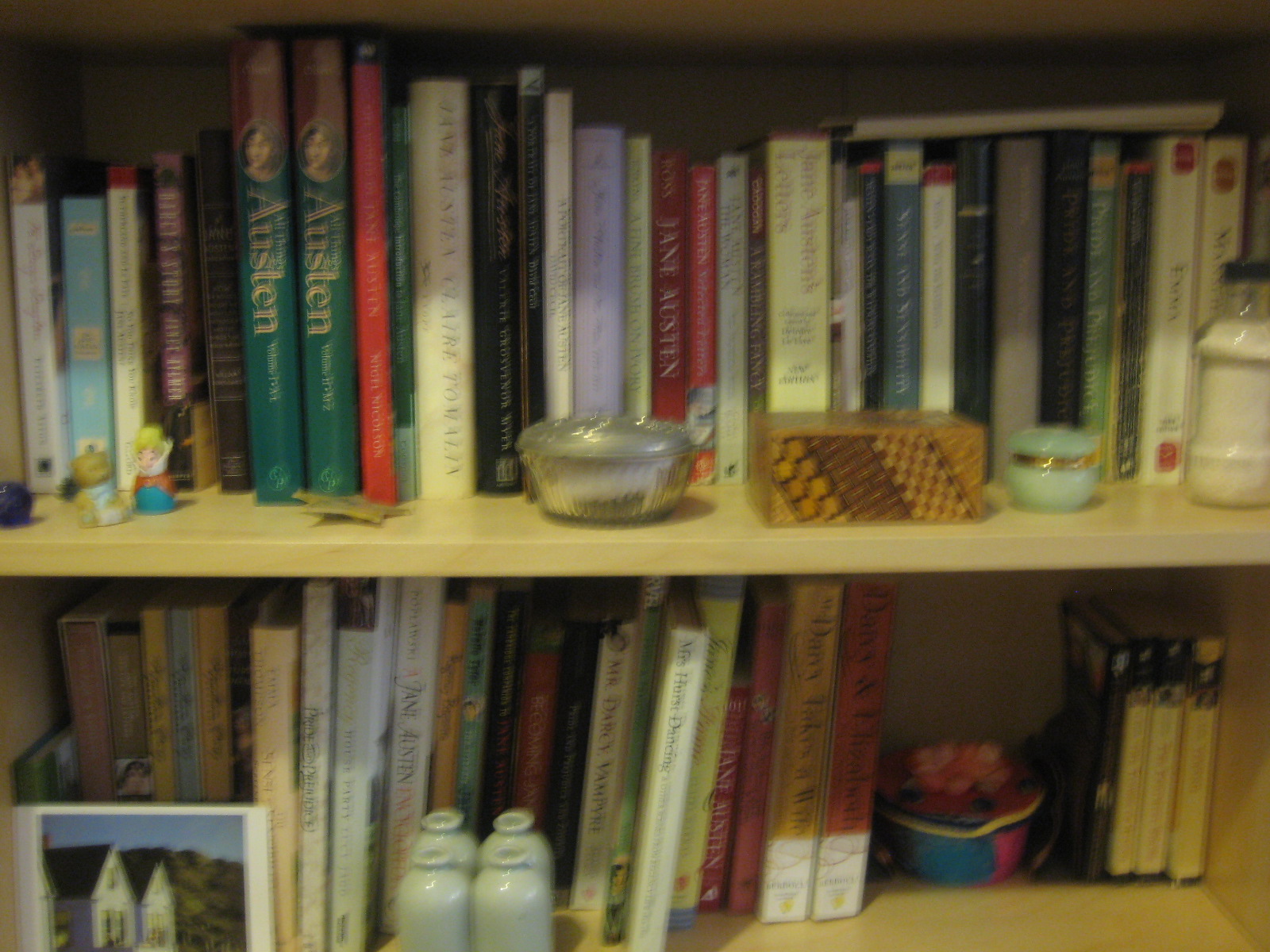
A small part of my Jane Austen collection
Since then, I have read the biographies, the Juvenilia, the letters, magazines, articles, on-line blogs, and have re-read the books countless times. I would rather go hungry than not purchase the newest edition of any of the novels, biography, or critical essays. I even watch and enjoy the cinematic versions of the books and Jane Austen’s life. My favorite P&P is no longer the Firth one; he being much too Byronic for my tastes and not the Darcy of the novel. I have read each book in different ways, sometimes I focus on character, sometimes it’s the language, I like to focus on reading between the lines to gently uncover Jane Austen’s witty and humorous and very accurate assessments of the people we still come into contact today. She was a master of language; her writing so exquisite and at the same time so humble. Unless you are looking for it this can be easy to miss. Virginia Woolf summed it up best in A Room of One’s Own,
“Anyone who has the temerity to write about Jane Austen is aware…that of all great writers she is the most difficult to catch in the act of greatness.”
So why Jane Austen? Because I am the giddy girl seeking romance, the intellectual woman looking for discourse on the perfect novel, the feminist fighting for female independence and a break from the accepted docile rendering of womanhood, the gray-haired lady who values penmanship, civility, and manners. Jane Austen answers to all of these various parts of my personality and so much more. I’ve never been let down by her and have always been able to find a kernel of wisdom, laughter, and joy no matter my mood. Her words have uplifted my spirits, answered difficult questions, and given me an understanding of people through the behavior of her characters. She is great. It is as simple as that.
 A Latter-day Bluestocking