A Latter-day Bluestocking

For the love of reading

The Rape of Nanking December 13, 1937

Cover of "The Rape Of Nanking: The Forgot...

Cover via Amazon

Today marks the 74th anniversary of the Rape of Nanking, an event so horrific that to even peripherally think on it brings feelings of anger, sadness, and horror to me.  Growing up as an American with Chinese ancestry I never heard of this “forgotten” atrocity.  It wasn’t until college when I took an Imperial Chinese history course that I began to delve into the history of my mother’s country and even later than that did I happen upon Iris Chang‘s seminal book on the subject of the massacre in Nanking which began December 13, 1937.

The Rape of Nanking:  The Forgotten Holocaust of World War II tells of the massacre and atrocities committed by the Imperial Japanese Army after the fall of the former capital of the Republic of China, Nanjing (Nanking).  Iris Chang, in writing and publishing this book, brought to light a neglected bit of history and opened my eyes to the horrifying events that took place.  The book is written in three parts:  the first, telling of the events leading up to and during the massacre; the second, describes the aftermath and western perception and reaction to these events; and the third, chronicles Chang’s theories of why this extreme barbarism committed by the Japanese still does not make it into the public consciousness.  This is some intense reading.  It has been some years since I’ve read this book but the memory is still very vivid of the detailed descriptions of rape, mass murder, live burials, mutilations, and torture.  I remember reading this book with feelings of intense horror and most of the time found myself weeping.  I kept asking myself why and how humans could commit such cruel acts on other humans.

And my disbelief doesn’t end with the tragic particulars of this dark part of Chinese history but the continued revisionist history coming from the Japanese government.  In 1995, the Prime Minister and Emperor offered speeches giving apologies for Japan’s merciless role but there has never been a formal written apology by Japan for the Nanking Massacre where approximately 300,000 Chinese were brutally murdered.  In 2007 Japan’s Liberal Democratic Party flat out denied the massacre ever happened, arguing that the events in Nanking are a fabrication.  The controversy continues to this day.

This book stands as a touching memorial, a strong testament, to those Chinese men, women, and children who were murdered during the Japanese occupation of Nanking.  These gruesome events are not to be swept under the carpet and denied, to forget would be a disservice to the victims dehumanized in a time of war.  I, for one, am reflecting on the victims and their murderers because to forget dooms us to repeat such savagery.

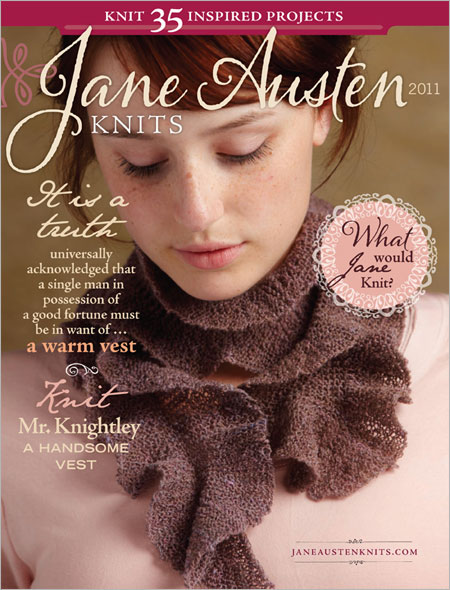
Jane Austen Knits

I picked this magazine up because clearly I am crazy.  This Jane Austen obsession is becoming all consuming.  I can’t even knit but the projects in this magazine are so enticing that I could not resist.  I want to learn and I am told that learning to knit is not that difficult.  So perhaps I will give it a go if only because I really, really want a knit Spencer to go with my Regency day dress.  But perhaps, it is best if I start off simply beginning with a scarf or a pair of mitts.

Did Jane Austen knit?  And if she did, what would she have knit?  In a period before industrialization it is not unlikely that women knitted blankets, shawls, scarves, cushions, and stockings.  Austen makes mention in Sense and Sensibility Mrs. Jenning’s plans for a knitting project and in an 1807 letter she describes her own knitting of a lap rug.

Martha’s rug is just finished, & looks well, tho’ not quite so well as I had hoped.  I see no fault in the Border, but the Middle is dingy.–My mother desires me to say that she will knit one for you, as soon as you return to chuse the colours & pattern.

The knitting of stockings was an undertaking easily employed by the poor to supplement their meager incomes.  It is probably not an unlikely supposition that Jane Austen and her sister, as daughters of a clergyman, may have knitted stockings for charitable distribution amongst the impoverished members of their village.

And besides, how can one not want to undertake some of these very beautiful pieces?

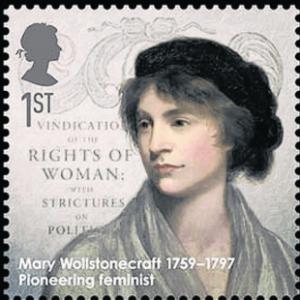
Quote of the Day: Mary Wollstonecraft

“Strengthen the female mind by enlarging it, and there will be an end to blind obedience.”  Mary Wollstonecraft, 1759–1797

Quote of the Day: George R.R. Martin

A Game of Thrones

“…a mind needs books as a sword needs a whetstone, if it is to keep its edge.”  (Tyrion Lannister, A Game of Thrones)  George R.R. Martin, born 1948


Period Drama Men // Sharp Dressed Man

Modern men take notice:  these gentlemen had a room full of women absolutely swooning.  Clearly we are starving for more than the man-boy look so prevalent today.  It would go a long way if you gents would make more of an effort.

A Jane Austen limerick

Mansfield Park by Jane Austen

I was once challenged to write a limerick about Jane Austen.  A limerick is a humorous verse, frequently bawdy.  In fact, it’s really no fun at all if there isn’t a bit of the naughty in it.  I am sure this person thought it would be impossible to write such a thing given Jane Austen’s reputation for lady-like gentility.  Ah, ignorant fool!  Little did this person know that Jane Austen, far from being a blushing prude,  knew what was what and wrote a famous pun referring to sodomy in the Royal Navy.

So here is my effort:

There once was a lady named Jane
Her scribblings are considered most tame;
But far from being dour,
Wrote a quip, to make us cower,
Of ‘rears and vices’ without shame.

Questions for the Latter-day Bluestocking

  1. What author do you own the most books by?   Jane Austen
  2. What book do you own the most copies of?  Pride and Prejudice
  3. Did it bother you that both those questions ended with prepositions?  Yes!
  4. What fictional character are you secretly in love with?  Stephen Maturin
  5. What book have you read the most times in your life?  probably Pride and Prejudice
  6. What was your favorite book when you were ten years old?  Fellowship of the Ring J.R.R.Tolkien
  7. What is the worst book you’ve read in the past year?  Good Behaviour by Molly Keane
  8. What is the best book you’ve read in the past year?  Room by Emma Donoghue
  9. Brits or Americans?  Brits
  10. Who deserves to win the next Nobel Prize for literature?  Me
  11. What book would you most like to see made into a movie?  None, they would just fuck it up!!
  12. What book would you least like to see made into a movie?  Go the Fuck to Sleep
  13. Describe your weirdest dream involving a writer, book, or literary character.  I dreamt of Winston Churchill and he told me that I should not be afraid.
  14. What is the most lowbrow book you’ve read as an adult?  The Complete Idiot’s Guide to Middle East Conflict.
  15. What is the most difficult book you’ve ever read?  The Rape of Nanking.  Actually, anything about Chinese history
  16. What is the most obscure Shakespeare play you’ve seen?  “Titus Corialanus.”
  17. Do you prefer the French or the Russians?  Unfortunately, the French.
  18. Roth or Updike?  I don’t know who they are.
  19. David Sedaris or Dave Eggers?  Sedaris
  20. Shakespeare, Milton, or Chaucer?  Milton
  21. Austen or Eliot?  Really!!!!!  See questions 1, 2, 5, 21, 23, 29, 31, 32.
  22. What is the biggest or most embarrassing gap in your reading?  I would have to be on life support for there to be a gap in my reading.
  23. What is your favorite novel?  Persuasion.
  24. Play?  School for Scandal  Richard Brinsley Sheridan
  25. Poem/Poets?  John Keats
  26. Essay?  Do not know
  27. Short story?  Young Goodman Brown by Nathaniel Hawthorne
  28. Work of non-fiction?  The Rape of Nanking by Iris Chang
  29. Who is your favorite writer?  Hmm, that’s a tough one.  I’m going to go with Jane Austen
  30. Who is the most overrated writer alive today?  Anyone after 1951
  31. What is your desert island book?  Pride and Prejudice

And … what are you reading right now? Mary Wollstonecraft:  A Revolutionary Life by Jane Todd and A Vindication of the Rights of Woman by Mary Wollstonecraft

Quote of the Day: Ralph Waldo Emerson

Photo of American Transcendentalist, writer, a...

“O Day of days when we can read! The reader and the book, either without the other is naught.”  Ralph Waldo Emerson, 1803–1882

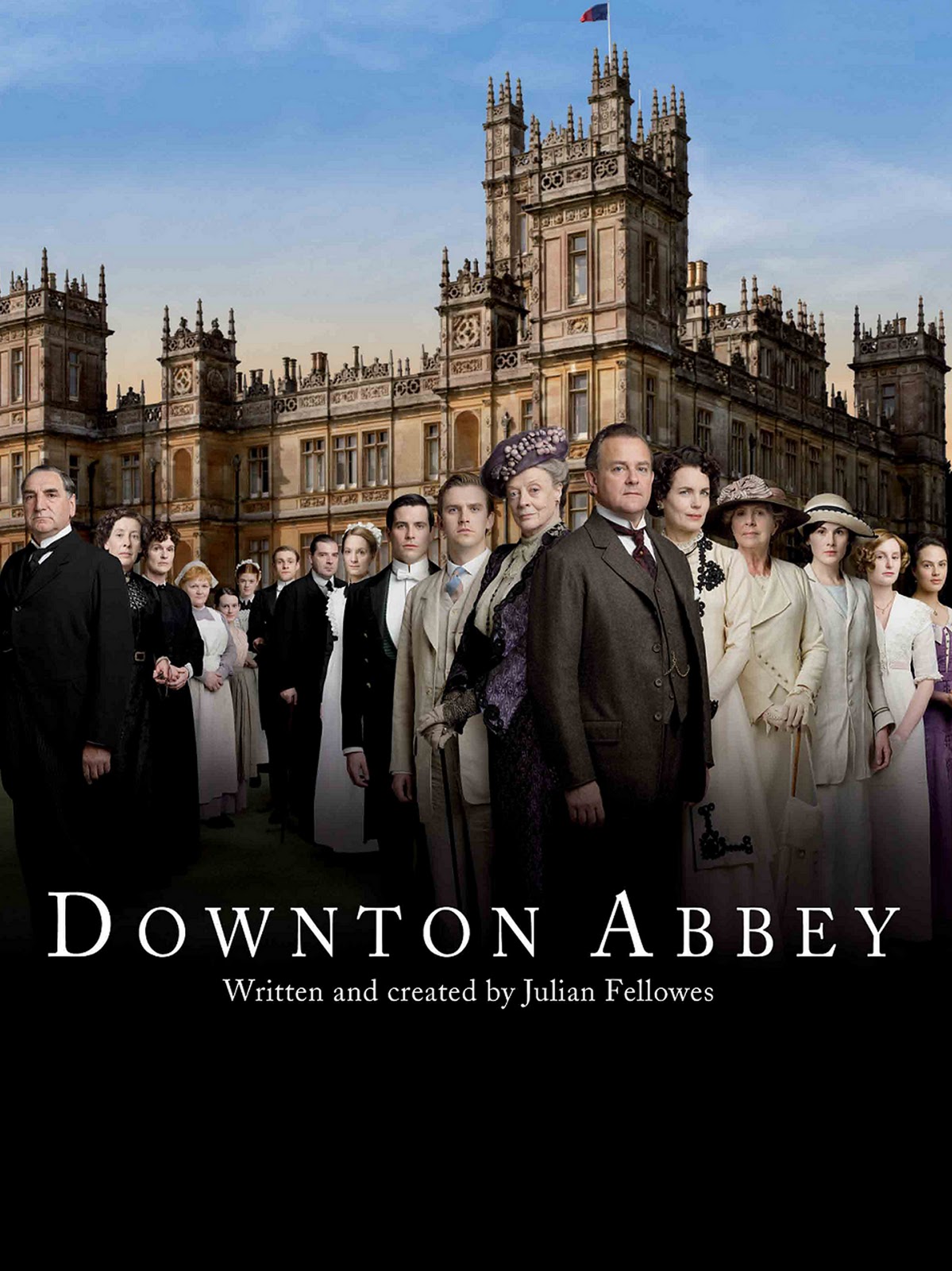
Downton Abbey

Ah, if there’s a cure for this, I don’t want it.  If there’s a remedy for this, I’ll run from it.  Think about it all the time; never let it out of my mind.  Cause I love Downton Abbey.

For those not familiar with it (have you been under a rock?) it is an English costume drama set on an aristocratic estate and follows the trials and tribulations of the fictitious Grantham family and their servants in the early 20th century.  Season 1 begins in 1912, April 15, 1912, to be precise and the family is shocked to have learned that the male heir to the entailed (all Jane Austen fans will know what this is) estate has died in the sinking of the RMS Titanic.  This throws the household into a dither because the next in line to inherit is in “trade”.  This is very hard to stomach by the three unmarried daughters who are not entitled to inherit.  The season ends as war is declared against Germany on August 4, 1914.  It has a stellar cast, beautiful clothes, exquisite manners, and a stunning country house.  It spotlights the last hurrah of the British upper classes before the devastation of war.  Right from the start, I was hooked.  I’ve always been a sucker for this type of entertainment and no one does this form of drama like the Brits.

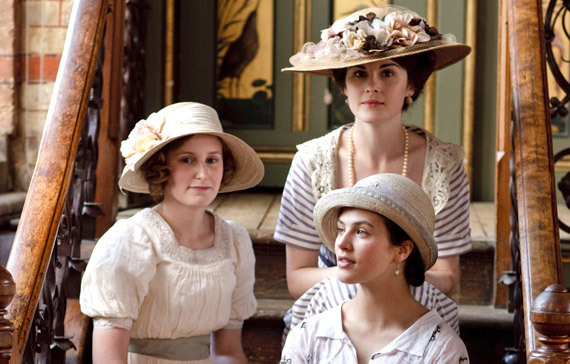
Poor little rich girls

So now I’ve been watching Season 2 on my laptop.  It is not something I do normally and usually am against watching anything on such an inadequate screen.  But for this I made an exception.  It could not be helped; it simply had to be done.  And I have not been disappointed.  Season 2 takes place during the years 1914–1918 when Britain is torn apart  by the brutality of trench warfare and English society, class structure, and way of life changed forever.  I cannot wait for the PBS airing in January so I can watch it properly.

Maggie Smith (a real scene stealer) as the Dowager Duchess, Lady Grantham is delicious!

 It is a soap opera and a well done one despite a few too convenient and shoddy plot lines.  So no, I do not want a cure for this obsession with Downton Abbey.  There are few pleasures in life and this is an extraordinary one. 

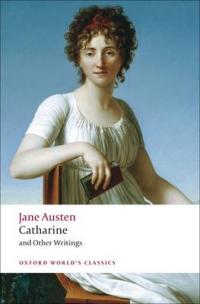
Catharine, or the Bower by Jane Austen

Today was a great day.  I presented at a book discussion Catharine, or the Bower, an unfinished story written by Jane Austen when she was 16 years old.  It is one of only two stories contained in Volume the Third of her youthful and ebullient writings, called the Juvenilia.  Her father wrote of them “Effusions of Fancy by a Young Lady Consisting of Tales in a Style entirely new.”  Austen’s earlier Juvenilia stories are literary parody consisting of coincidences, lurid horrors, and comic situations.  They are boisterous and youthful and border the ridiculous and satirical towards the sentimental.  Despite being written by such a young person (beginning at the age of 12) the stories are chock full of theft, drunkenness, sexual indiscretion, and lewdness, found to be most shocking by the Victorians.  Her family refrained from publishing the volumes of the Juvenilia wanting to keep the reputation of the demure and devout maiden aunt pure.  They were not published until 1933 (Volume the First), 1922 (Volume the Second), and 1951 (Volume the Third).

Catharine is considered important because, albeit raw, it intimates the maturity of her later published novels.  Austen is beginning to direct her wit towards her interests of courtship, romance, and family relationships; the range and depth of her characterization, clarity of dialogue and action is emerging.  Discernible are familiar character types that will be more fleshed out in the novels:  self-centered, selfish, and empty-headed young ladies; thoughtless, idle, and seductive young gentlemen; vivacious, witty, and bright heroines, and conservative, over-protective and hypochondriac elders.  Catharine also hints at acceptable principles of behavior and class distinction characteristic of her fully developed novels.

So, yes, today was a good day.  I got to express my own “effusions of fancy” about my favorite author and am still allowed to join in next month when we will discuss A Vindication of the Rights of Woman by Mary Wollstonecraft.  I already have this and a biography of the early feminist in my To Read list!